TPW Photographers Interview Series #77 29/11/2015 English Photographer based in, London, England, Street, Portrait & Travel: Nick Fleming 1) What Photobooks are you currently looking at ? When I was at college many years ago doing a photojournalism course […]
It is unlikely to come as a surprise to those who have eaten it, but the substantially upholstered toasted cheese sandwich, put together by the team at Kappacasein, has recently been selected by ‘Time Out’ as one of the top […]
I am a photographer who is prepared to wait, to be patient and not to rush into certain situations. In my experience it is sometimes so much more worthwhile not to pursue a photograph the instant I find myself in […]
Its familiar curves and loops were outlined on the stadium floor in the London 2012 opening ceremony. James Bond, accompanied by Her Majesty, flew a helicopter through one of its iconic bridges. Oligarchs and the fabulously wealthy used it to slip into the city in their super yachts. This Summer, Londoners have seen their timeless river like never before…
I was struck how in the hands of a skilful blacksmith unpromising chunks and lengths of steel could be coaxed, fashioned and stressed with precision hammer blows into lifelike expressions in metal.
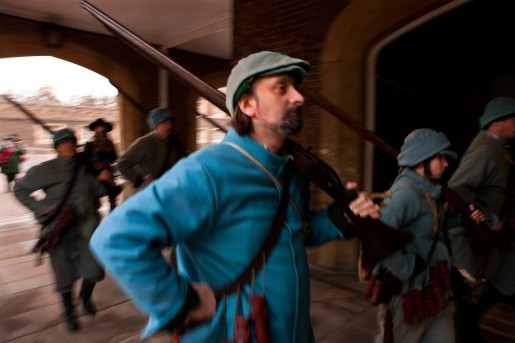
On the last Sunday in January the “King’s Army” converged on the centre of London. There was none of the usual parry and thrust of pike and sword, of field manoeuvres and gun smoke as is the custom when these […]
Sometimes, perhaps rarer than that, I meet a person through photography whose qualities match exactly the trade or calling to which they have dedicated their life. They were quite simply born to do what they do, destined to follow their […]
Thinking about it now, I don’t think I have ever been refused a photograph by anyone I have sat and drank tea with. In India it is an essential ice breaker; a liquid preamble to any really meaningful social discourse and a chance for your host to get the measure of you.
Many years ago I met a well known English artist while I was travelling through Northern India. We happened to be staying at the same hotel, one of those rather agreeable converted palaces. Each day he went out with his watercolours, easel, portable chair and sizable sketch books, as he used to say, ‘to seek inspiration and watch the world go by…’
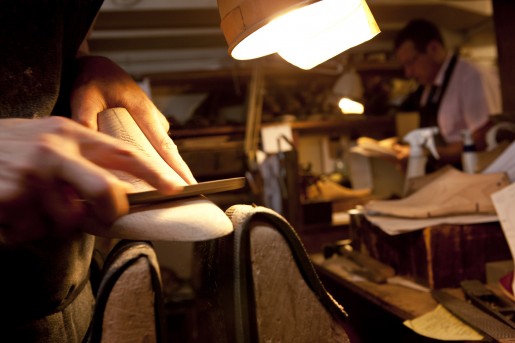
‘If you want to know the measure of a man look at the shoes he wears’. This well known aphorism came to mind as I squeezed myself into a barely workable space to take some photographs in the basement workshop of one of the most celebrated shoemakers in the world…
‘Art in Action’ is a celebration of craftsmanship: a one stop show case for demonstrable artistic endeavour. It provides a rare opportunity to observe painters, woodcarvers, weavers, potters, glass -blowers, jewellers, sculptors and a host of other artists, normally tucked away in studios, openly displaying their creative skill in the grounds and gardens of an appealing English country house…
All the classic Himalayan pilgrimages are, by the very nature of their high altitude destinations, really quite arduous and challenging. I therefore knew what to expect when I set out from the small village of Gangotri to walk up to […]
The first of the month, May Day, in England is often associated with parades and protest, country carnivals and Bank holidays and peculiar pagan ceremonies wrapped in obscure folklore and tradition…
Though the dawning of the day is still a long way off, we have another summer and winter to get through first, it is nonetheless there in our consciousness, not fully formed maybe, but there just visible on the horizon […]
On the Sunday before St. Patrick’s Day, London hosts one of the biggest street parties of the year, an extravaganza of all things Irish including, of course, singing, music and dance. Working as a photographer in this sort of lively fun atmosphere is an enjoyable experience because participants expect to be photographed and indeed positively relish the experience.
January is invariably a month which provides us here in London with rather grey and gloomy rain soaked skies. It has again been commendable in its consistency. The short days, the flat light and the raw cold temperatures really don’t help the photographic process.
Nonetheless, there have been a couple of days, nights actually, that have been perfect, where a near cloudless sky provided just the right backdrop to two very different displays of light and colour…
I was recently selected to be part of the Microsoft “I’m a PC” ad campaign. Watch my cameo’s here as well as the video response, Hari Karam Singh and I put together… I’m a PC #1 (1m1s) [youtube=httpss://www.youtube.com/watch?v=HrmF-mPLybw] I’m a […]
The announcement of Baba Santa Singh’s death was met with little surprise but greeted with much sadness. With his health ailing for some time now, and since January of this year a long term patient in Patiala hospital, Baba Santa […]











 and
click the link contained within it
to confirm your subscription...
and
click the link contained within it
to confirm your subscription...